Why CRM Systems Fail in Field Sales: It's Not a Compliance Problem
Sales teams often struggle with incomplete CRM entries. The false narrative is that this is a compliance problem among reps. But the real issue starts upstream, where critical information gets lost in transcription. By the time they set down to enter details into the CRM, reps can't recall everything from conversations after it happens.
Where The System Breaks
CRM systems assume that reps will accurately remember and log every detail of their interactions. This fails in the field. Real conversations are dynamic and often off the cuff. The timing of entries is critical to retain details. By the time a rep sits down to log a meeting, their memory is clouded by other tasks and the cognitive load is too high, leading to distorted or incomplete entries.
Why The Usual Fixes Don't Work
Common fixes include training sessions initiated to improve data logging and the introduction of stricter compliance checks (hello required fields!). Training fails because it doesn't address the structural issue - human memory is not reliable under pressure. Compliance checks only add friction, creating resentment instead of accountability. These approaches overlook the simple fact that the environment dictates behavior far more than strict rules and compliance mandates can.
The Core Failure Mode
Let's call it Memory Drift. It's the gap between what reps actually remember and what they need to log. This gap grows when conversational pressure is high and when timing isn't on the rep's side. Recognizing Memory Drift is the first step to fixing broken systems.
What Correct System Design Looks Like
Correct system design adapts to human behavior rather than forcing humans to adapt to it. Focus on reducing cognitive load and providing solutions (or in this example, meeting details) at the right time. Sales tools and CRMS should facilitate seamless data capture, allowing real-time insights without requiring extensive rep action after the fact. Design with constraints in mind—how can you work within a rep's reality rather than against it?
Where Listel Fits
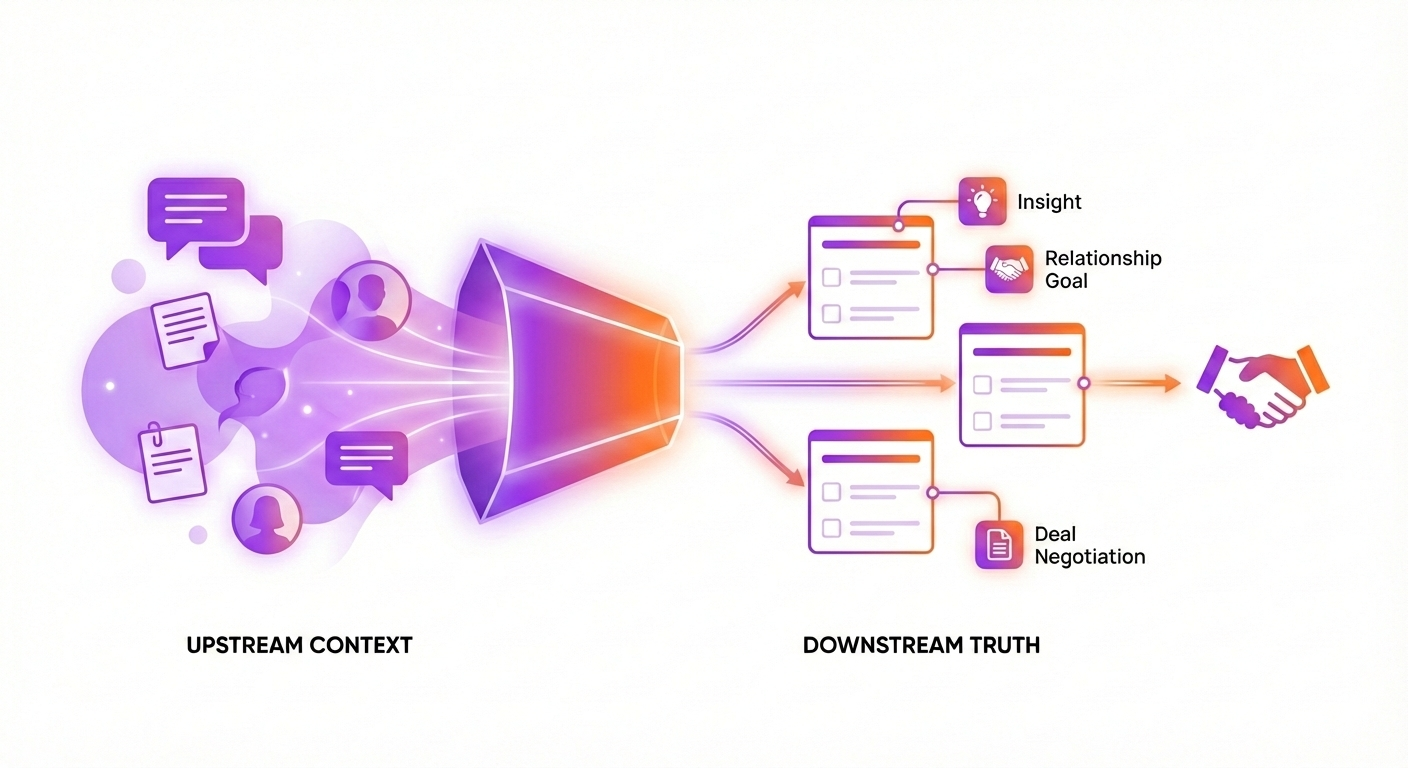
Listel embodies this correct design by enabling upstream capture of information where it happens. It prioritizes accuracy and context during conversations, which results in downstream truth in your CRM. It supplements human memory instead of competing with it, ensuring that what gets logged is an accurate reflection of reality. Reps walk away from a meeting with the notes in their CRM before they even open their computer.
Takeaway
Stop assuming reps are failing—you need to examine the systems that set them up to fail.