The Flaws in Your Follow-Up System You're missing
Opening diagnosis
In the world of sales, follow-ups are the lifeblood of building relationships and closing deals. Yet, many reps find themselves struggling to keep their follow-up game strong. It's not about effort or intent; it's a systemic issue that can be tied back to how teams manage their follow ups.
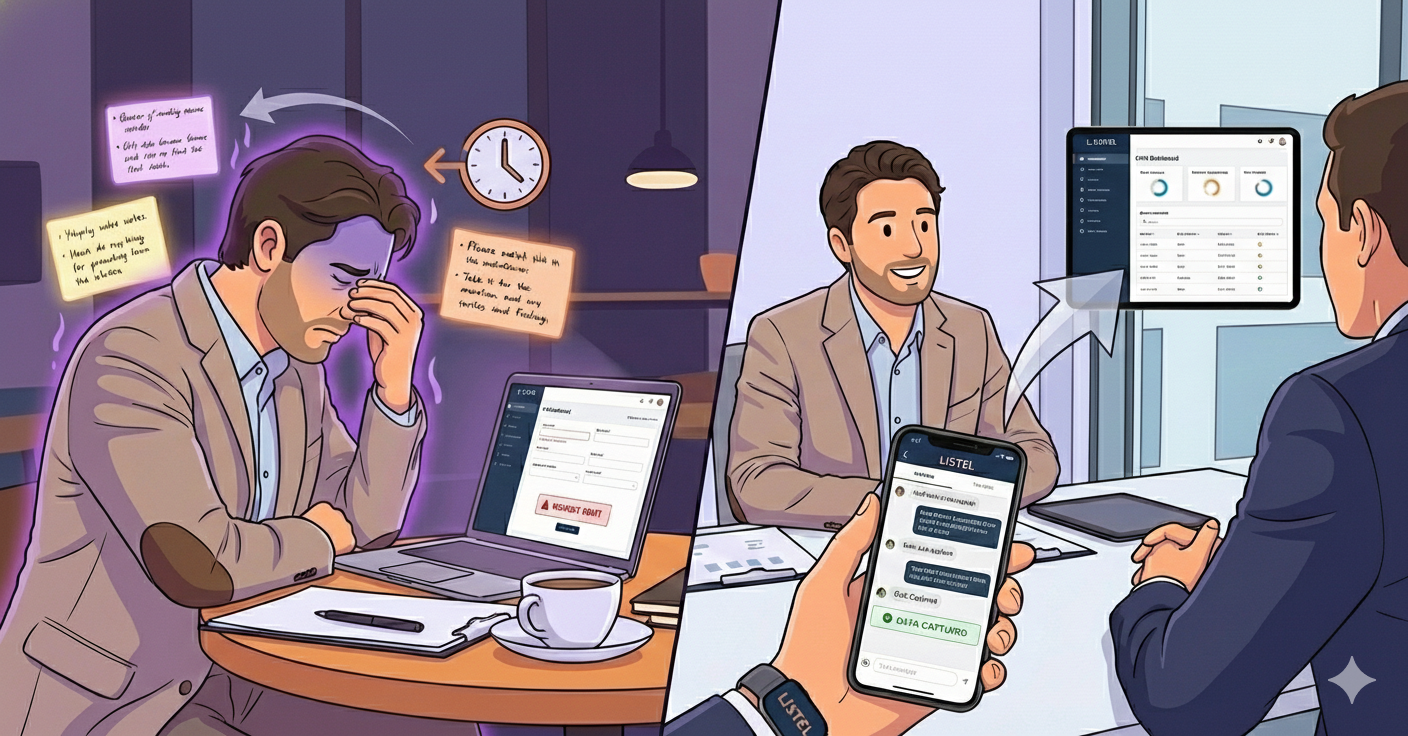
The common narrative is that sales reps fail to follow up effectively due to poor time management or a lack of motivation. However, the real culprit is often overlooked: our CRMs store tasks, but they don't capture the reasoning behind them. When a rep checks off a follow-up task, they may not understand why that follow-up matters in context of the conversation or series of conversations, reducing it to a check box and often ineffective.
Often we are asking reps to execute actions without context, which can lead to missed opportunities. Follow-ups fall apart not because of reps failing to complete them, but due to a flawed system that doesn't provide the necessary insights into why those follow-ups are important.
Where it breaks
Let's break down the workflow. A rep schedules a follow-up after a first call. They log this in the CRM, with a simple "Follow up with client on Project X" task. What happens next? Time moves on, perhaps the rep faces distractions, and eventually, the task is diluted to a task list item that may or may not be done.
Then, two weeks later, the rep sees the overdue task and scrambles to send a message. But instead of a thoughtful check-in, it's formulaic: "Hi, just checking in on XYZ." That's where it breaks. The follow-up lacks purpose, and as a result, it feels disconnected. The customer, who might have been interested, receives a generic nudge devoid of context and meaning.
Why the usual fixes fail
Often, the go-to solutions to improve follow-up effectiveness involve more rep training or tweaking the CRM for stricter required fields. We can pick these common fixes apart:
-
More reminders: Adding more alerts may help in getting the task done, but it won't improve the quality of the interaction. It becomes just another checkbox, not helping to engage meaningfully.
-
Templates and scripts: Reps may turn to generic templates for emails or calls, but these strip away authenticity. When a rep feels they're reading a script, they're less likely to engage genuinely with the client.
-
Additional metrics: While analyzing completion rates can provide some insight, it often leads to a focus on quantity over quality. Reps start to view follow-ups as mere numbers in the game rather than as an essential part of nurturing client relationships.
The failure mode
We call this the Context Collapse. It's the phenomenon where tasks in your CRM exist in a vacuum, stripped of the critical reasoning behind them. Without understanding the "why," follow-ups become transactional rather than relational. This leads to disconnection, missed opportunities, and ultimately, lost deals.
What better design looks like
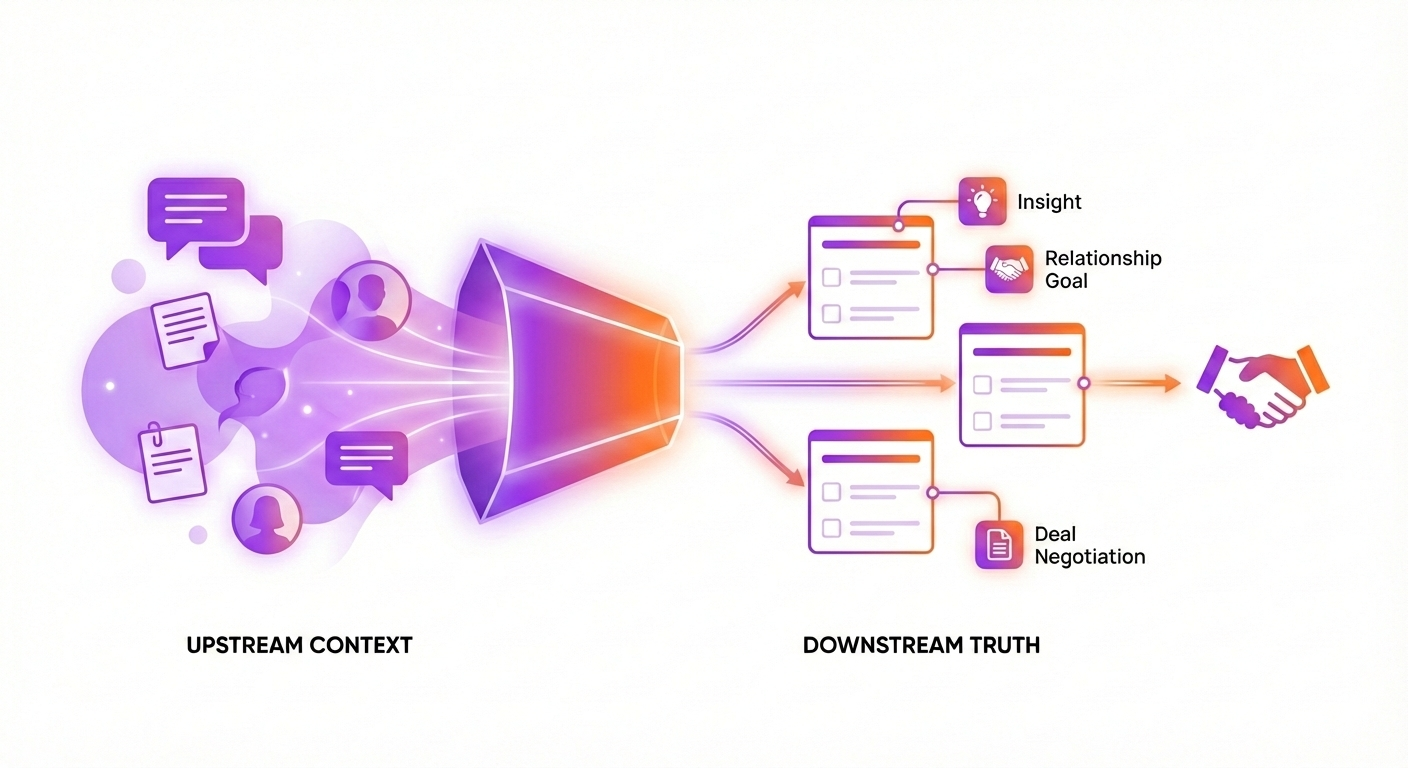
Designing a system that accounts for human cognition starts upstream. Instead of just capturing tasks, we should be capturing the context behind those tasks. Follow-ups should be framed with clear objectives: what is the goal of the interaction? What insights do we have about the client's needs or previous conversations?
When systems adapt to the natural way humans think and interact, they foster meaningful engagement. For instance, integrating notes directly linked to tasks can provide reps with vital information that re-engages their memory and emotional intelligence, allowing them to communicate effectively rather than mechanically.
Where Listel fits
This is where Listel shines. By focusing on upstream capture leading to downstream truth, we empower reps by supplying the context that fuels effective follow-ups. Listel captures client interactions where they happen, in face to face context helping reps understand the significance of their actions rather than just ticking boxes.
Our approach doesn't require more features; it transforms how data is captured and how it is utilized. We're not about creating more tasks automatically, we're about connecting context that would've never been possible before.
Takeaway
Follow-ups shouldn't just be tasks to check off – they should be meaningful interactions driven from real face-to-face data.