CRM Adoption: It's Not About Rep Discipline
Opening diagnosis
Every sales leader has witnessed the struggle: CRM systems that promise efficiency instead become obstacles. As a result, the narrative often shifts to blaming the team—"If only they'd fill out the fields better." This perspective, however, puts the blame on the rep instead of the system itself.
Sales teams are not resistant to change. They're hindered by tools that are built for reporting and leadership instead of their daily flow. Instead of adopting a new behavior, reps are forced to navigate a process that their boss or someone in the corporate office came up with because it sounded good. When the system doesn't align with their objectives or timing, it creates friction that ultimately leads to poor compliance, inaccurate data, and lackluster results.
Where it breaks
The crux of the issue lies in workflow design. Any successful sales person will tell you: they thrive on agility and responsiveness. They need to capture information about prospects and conversations quickly and accurately. Yet, many CRMs require reps to pause and manually input data that disrupts their rhythm, often hours or days after valuable conversations.
Imagine this: a rep just finished a promising call and has a golden opportunity to jot down insights while they're fresh. Yet, instead of a quick entry that captures a sentiment or detail, they're wrestling with a cumbersome interface that prompts them to slog through fields, dropdowns, and requests for information. Or better/worse, they're back to back with other calls, driving between appointments. This moment of disconnect highlights a major flaw: the system wasn't designed for the workflow in the field.
Why the usual fixes fail
In response to this disconnect, sales leaders often implement a few common fixes. Maybe they provide more training on the CRM or introduce incentives for proper usage. These strategies typically fall flat or worse incentivize "hacks".
First, more training only addresses the symptoms, not the underlying causes. If the tool doesn't fit the context of how reps operate, no amount of training will create sustainable change. Second, incentives can feel like policing rather than empowering; they force compliance without fostering genuine engagement with the system. Lastly, layering additional "features" on top of a misaligned CRM doesn't equate to a better user experience. It only adds complexity.
What better design looks like
What does a better system design entail? It starts with understanding the constraints under which sales teams operate. Instead of forcing behavior changes, teams should focus on creating tools that adapt to existing workflows.
This means prioritizing seamless capture of information in real-time. Imagine systems that allow reps to log meetings without opening up their CRM app. When these updates happen in the background rather than disrupting the rep from what they do best - connect with customers, adoption becomes a natural byproduct, not a chore. This isn't about cramming more fields into the platform; it's about designing around the user's experience.
Where Listel fits
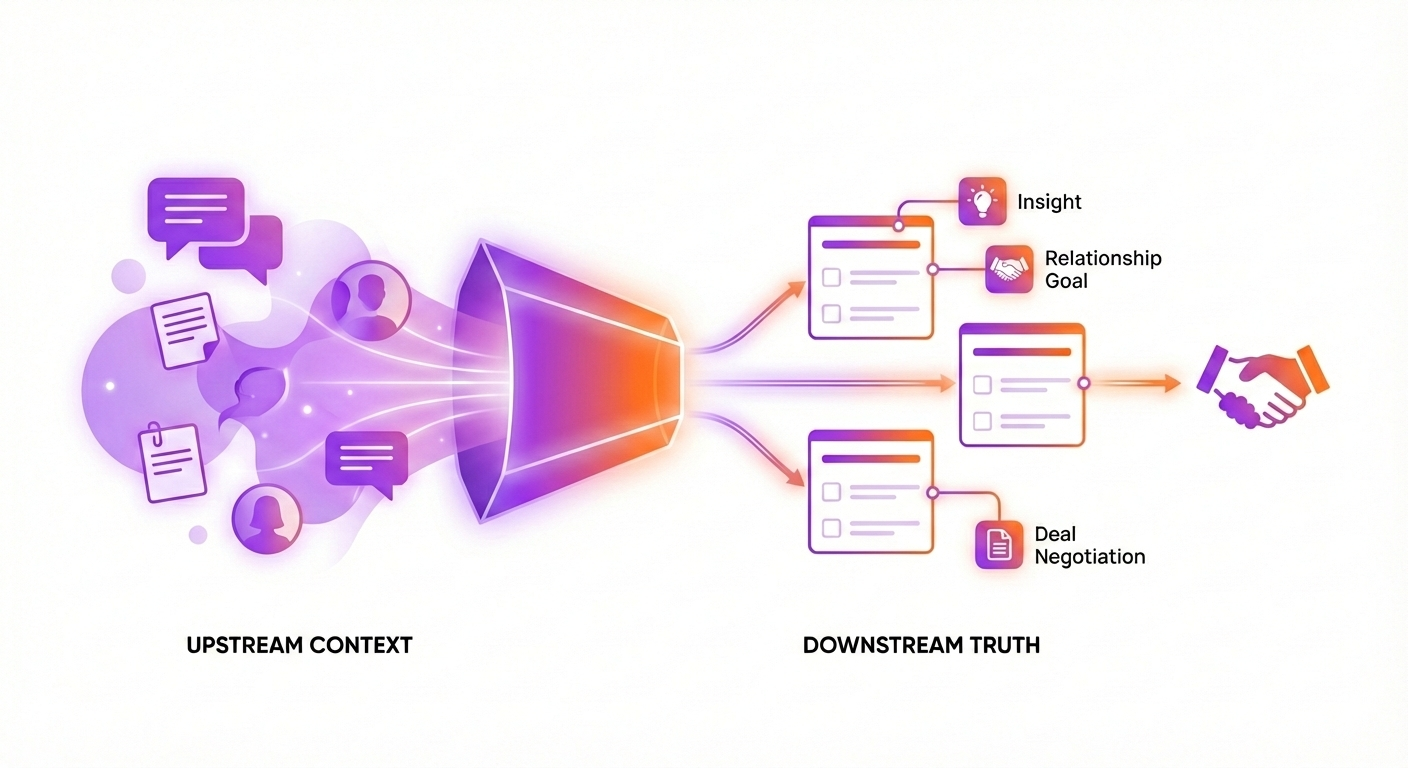
This is precisely where Listel comes into play. We embody the principle of "upstream capture → downstream truth." Our platform helps reps gather insight without interruption during the sales process, fostering a natural flow from initial engagement to data logging. By prioritizing what they do best and not CRM slop, we create a system that aligns with how they naturally operate, resulting in accurate data and improved outcomes.
Takeaway
When you rethink your CRM as a facilitator rather than a barrier, you'll find that engagement isn't a matter of discipline—it's about design.